Dog Birthday
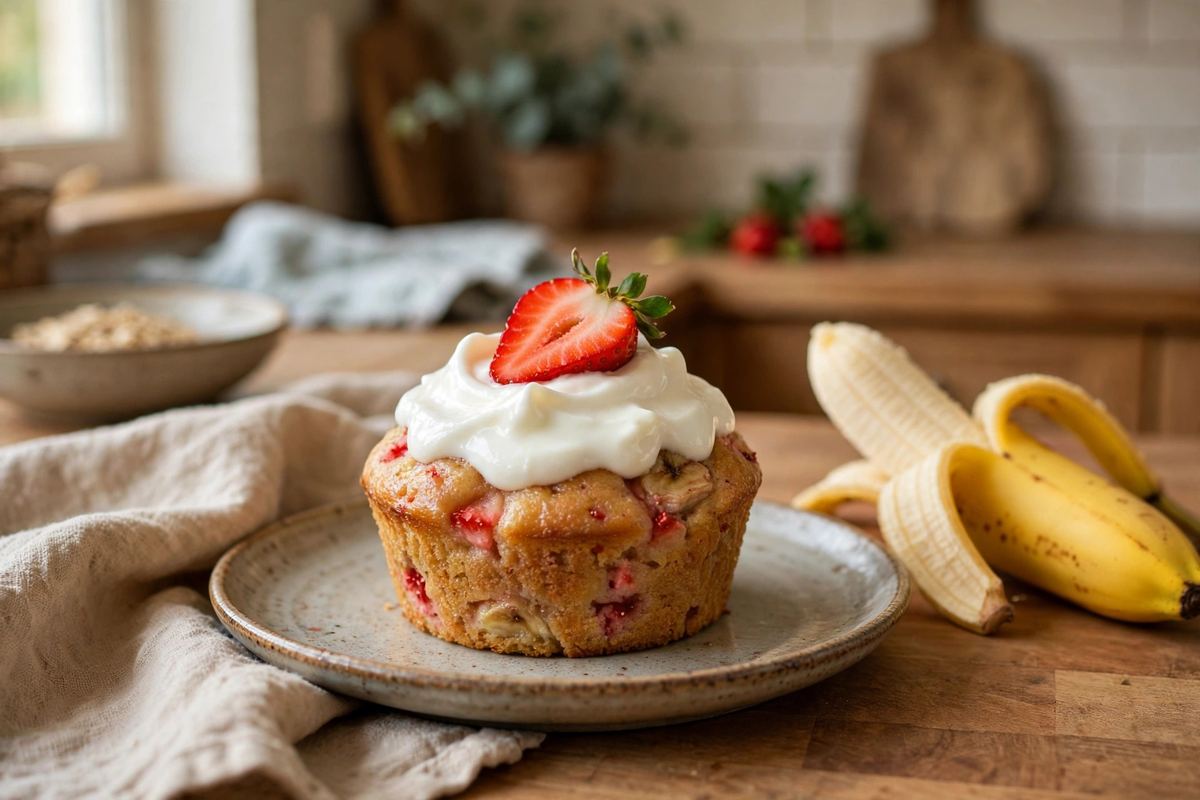
Strawberry Banana Pupcake
A small strawberry banana pupcake with a plain yogurt topping for celebrations.
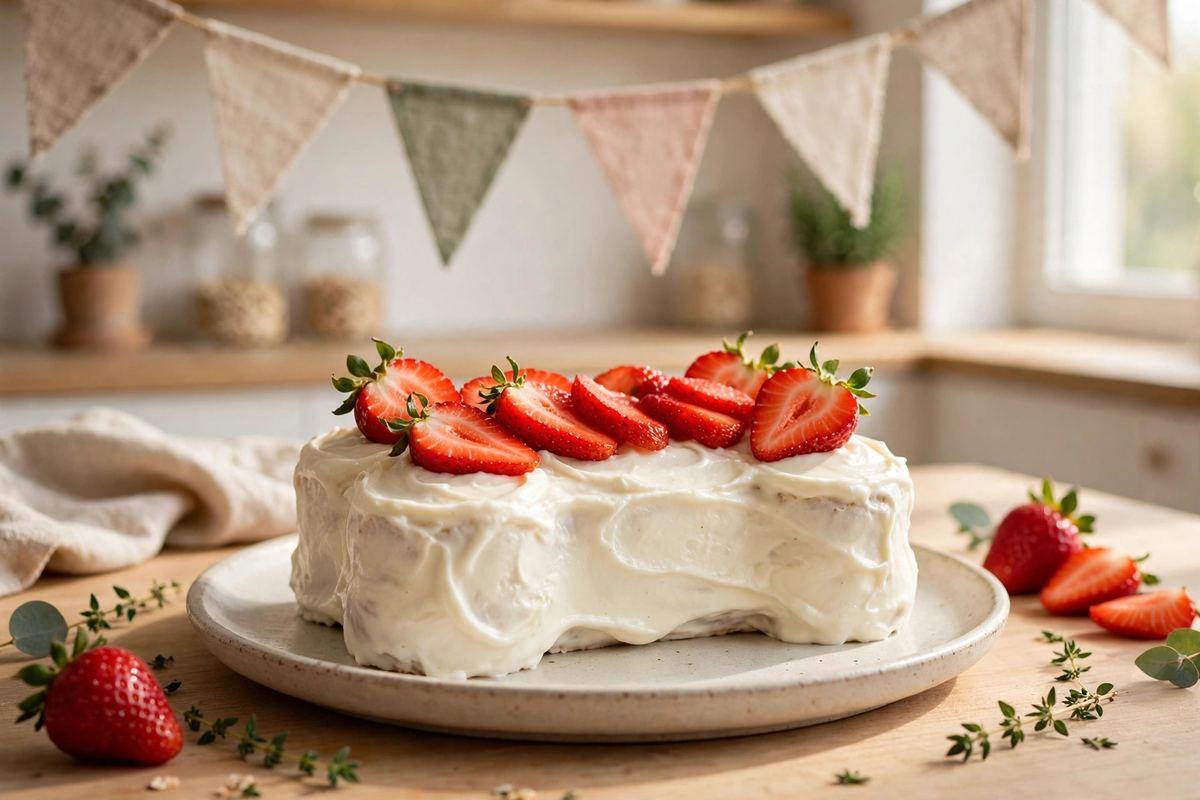
Get the RecipeA small strawberry yogurt birthday cake for dogs with plain yogurt frosting and fresh sliced strawberries.
Store the frosted cake in a sealed container in the fridge for up to 2 days. Freeze unfrosted slices for up to 2 months and decorate after thawing.
| Dog size | Suggested portion |
|---|---|
| Small (under 20 lb) | 1 small slice (about 1/12 of the cake) |
| Medium (20-50 lb) | 1 slice (about 1/8 of the cake) |
| Large (over 50 lb) | 1-2 slices (about 1/8 of the cake each) |
Treats should make up no more than about 10% of your dog's daily food.
Yes, in small treat amounts. Wash them, remove the green tops, and cut them into small pieces.
Yes. Thaw and drain them well, and expect a slightly softer, pinker crumb.
A little mashed banana adds moisture and natural sweetness without added sugar.
Serve it the same day for the freshest topping, and refrigerate leftovers for up to 2 days.
A small strawberry banana pupcake with a plain yogurt topping for celebrations.
Get the Recipe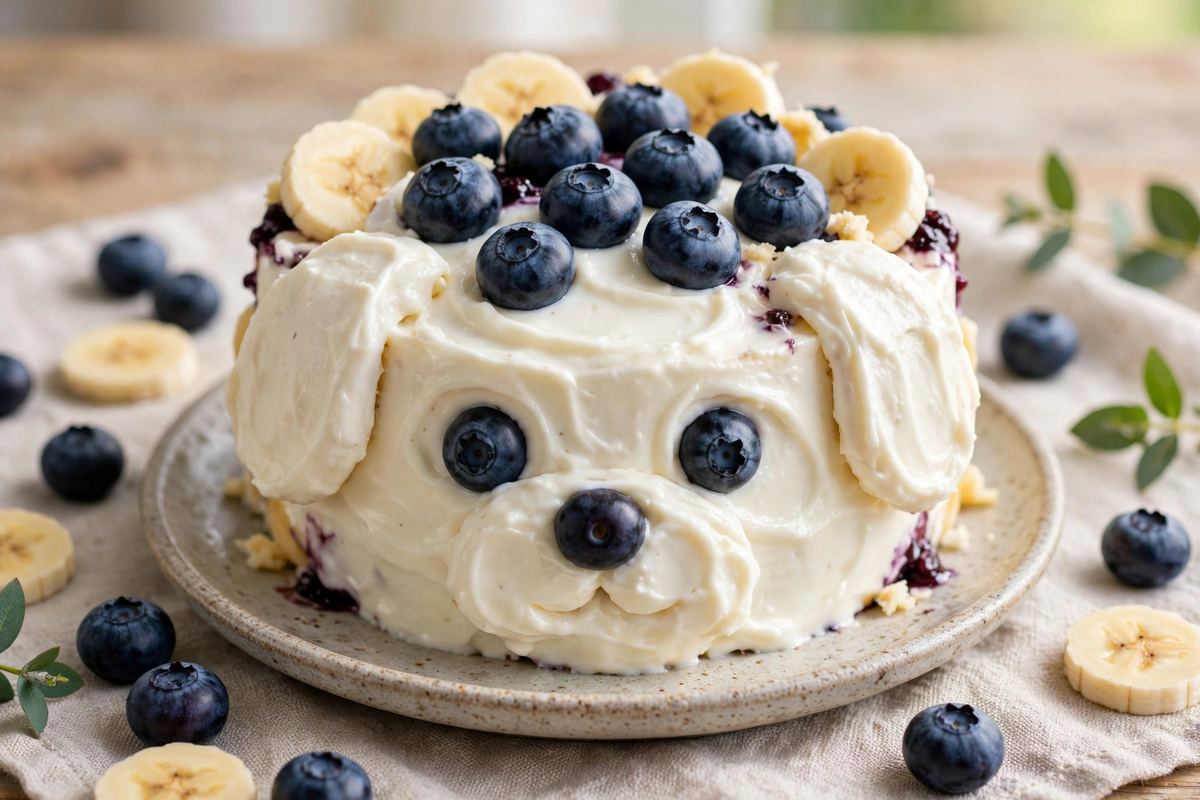
A small blueberry banana birthday cake for dogs with a simple yogurt topping.
Get the Recipe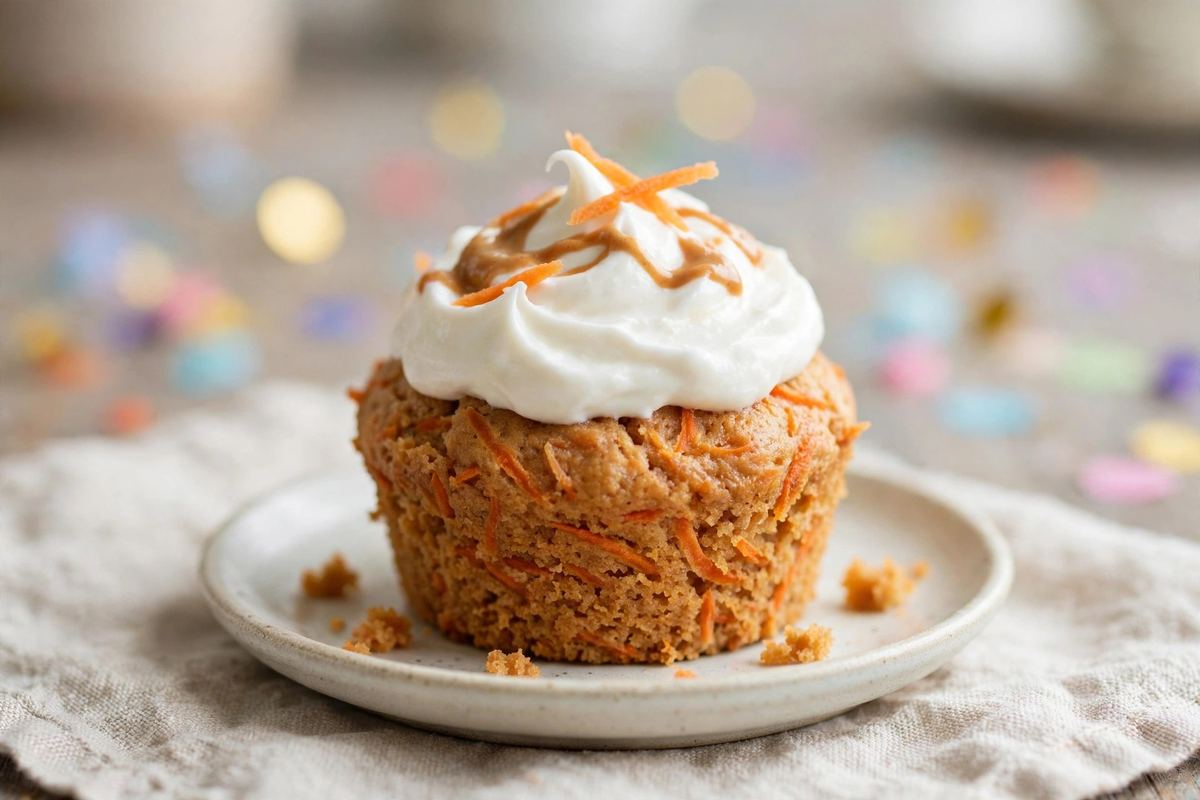
A single-serve carrot pupcake with yogurt frosting — perfect for your dog's birthday photo moment.
Get the Recipe